Visit India- Taj Mahal
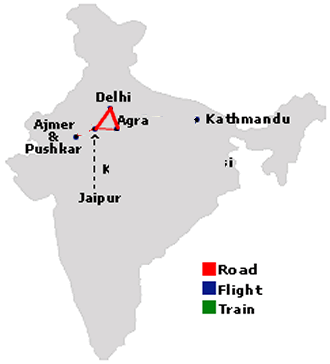
| This time during our visit to India, we wanted to see the famous Taj Mahal. So we decided to go on a week-long tour to see Delhi, Agra and Jaypur which is called the Golden Triangle of India. Here are some highlights of these towns thro my Nikon. (Click on any image to enlarge it!) |
 |
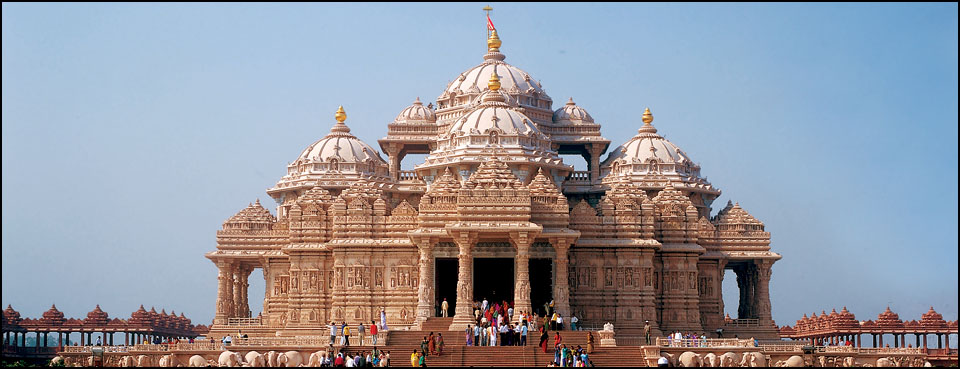
First, we started our tour to Golden Triangle of India with visit to modern marvel, Askshardham.
Swaminarayan Akshardham in New Delhi epitomizes 10,000 years of Indian culture in all its breathtaking grandeur, beauty, wisdom and bliss. It brilliantly showcases the essence of India's ancient architecture, traditions and timeless spiritual messages. The Akshardham experience is an enlightening journey through India's glorious art, values and contributions for the progress, happiness and harmony of mankind. The grand, ancient-styled Swaminarayan Akshardham complex was built in only five years through the blessings of HDH Pramukh Swami Maharaj of the Bochasanwasi Shri Akshar Purushottam Swaminarayan Sanstha (BAPS) and the colossal devotional efforts of 11,000 artisans and BAPS volunteers. The complex was inaugurated on 6 November, 2005.
Here is one close-up. For more pictures, visit the official website of Akshardham.
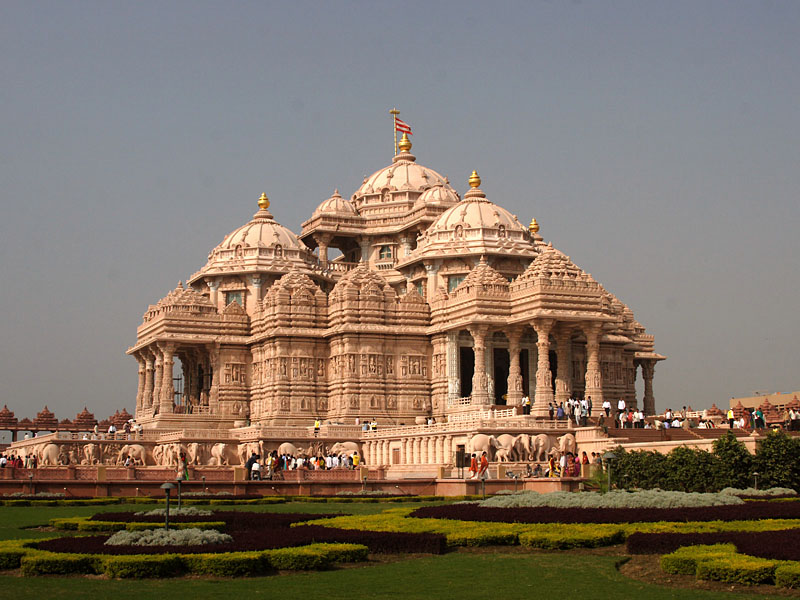
In this temple, I met my college friend who has in fact renounced this wordly pleasures and become a saint. He was managing a team of 8000 plus artists (stone carvers) who worked on creating pieces of this amazing monument. Miraj had wonderful time meeting him and other saints and getting VIP treatment during his visit to this monument.
Now let us look at some historical monuments in this Golden Triangle area.
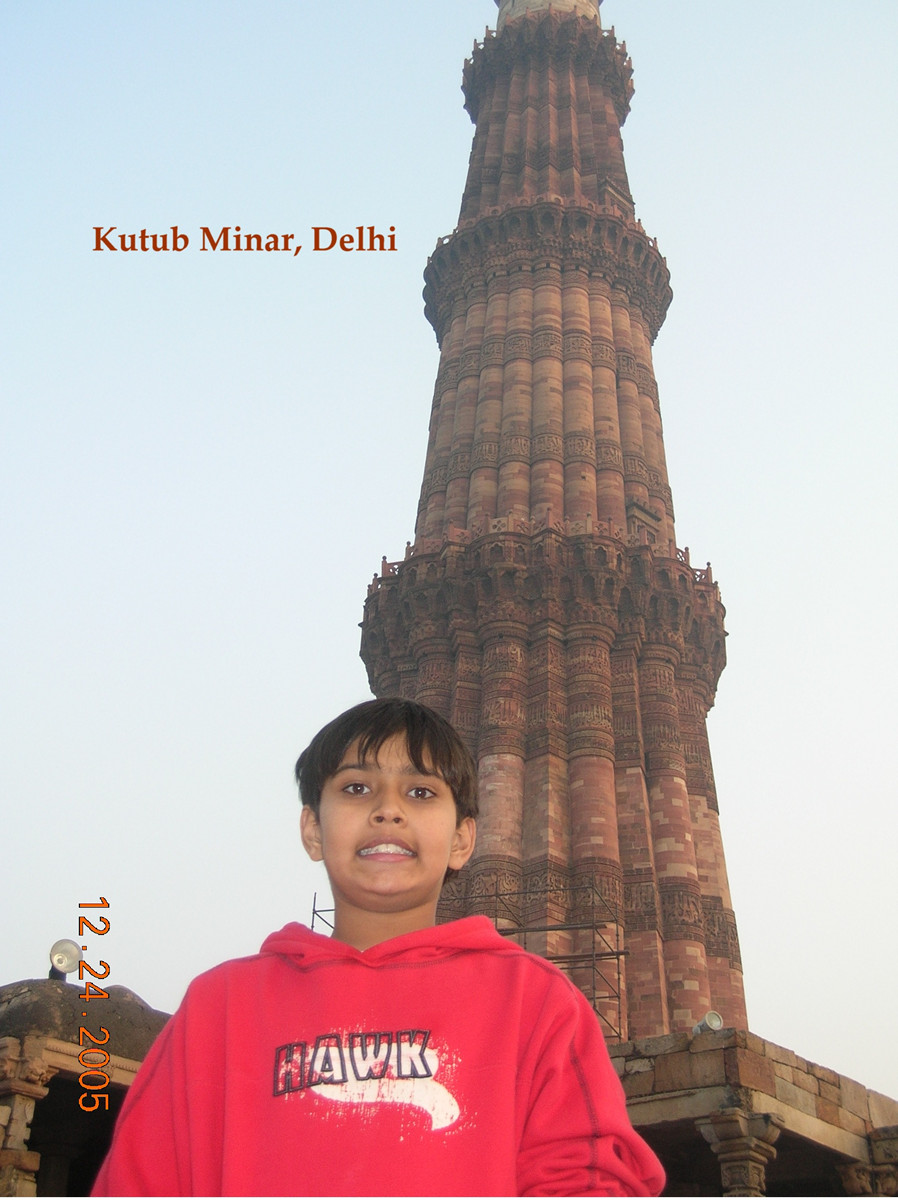
Qutub-Minar in red and buff sandstone is the highest tower in India. It has a diameter of 14.32m at the base and about 2.75m on the top with a height of 72.5m (Wow! Like a 20 plus storey building and that too built in 12th century!!!). Qutb-u'd-Din Aibak laid the foundation of Qutab Minar in AD 1199.
The minar was said to have been built to celebrate the victory of Mohammed Ghori, the invader from Afghanistan, over the Rajputs in 1192. He raised the first storey, to which were added three more storeys by his successor and son-in-law, Shamsu'd-Din IItutmish (AD 1211-36). All the storeys are surrounded by a projected balcony encircling the Minar and supported by stone brackets, which are decorated with honeycomb design, more conspicuously in the first storey.
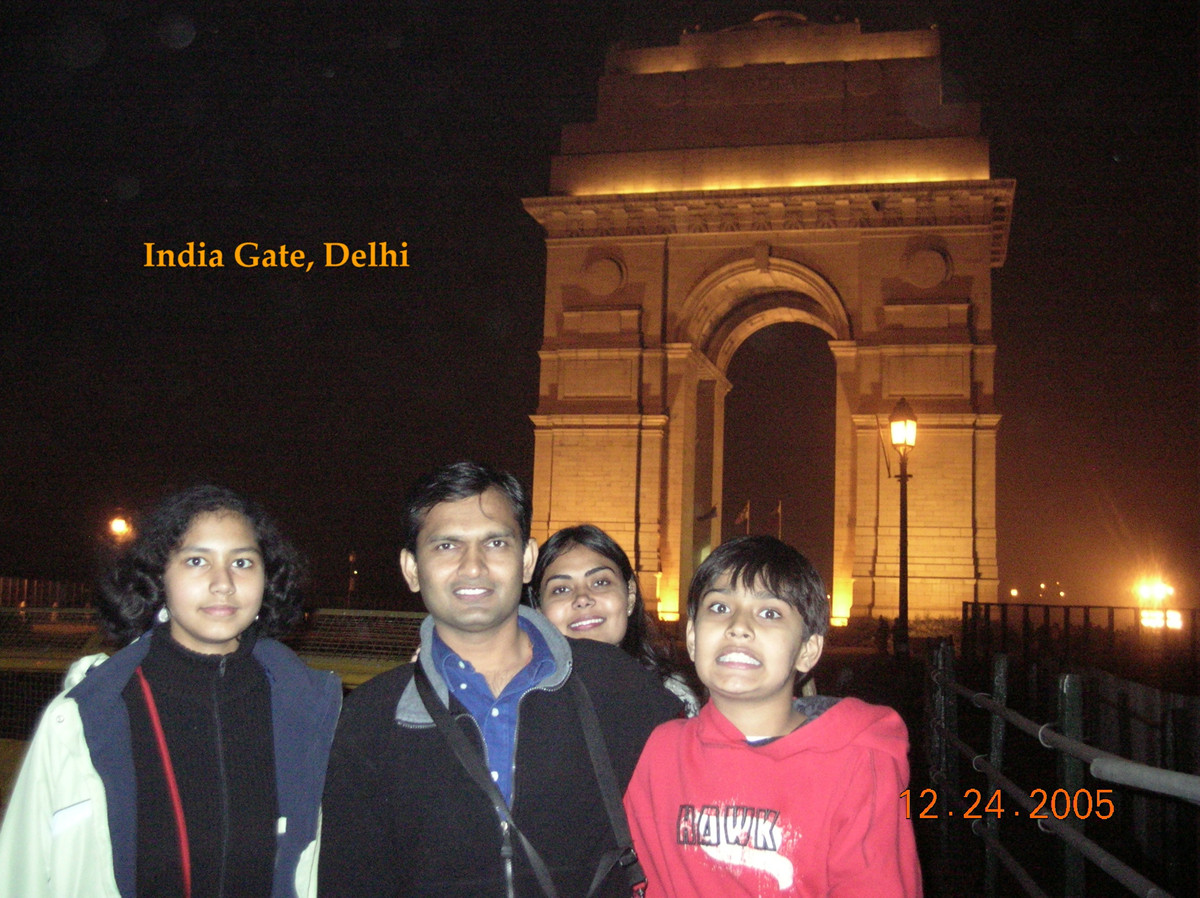
India Gate, Delhi Built as a memorial to commemorate the 70,000 India soldiers killed in World War I, India Gate was designed by Sir Edwin Lutyens and completed in 1931. Located on Rajpath, the road which leads to the magnificent Rashtrapati Bhawan, the gate is 160 feet high with an arch of 138 feet.

While most people visit Agra to see the Taj Mahal, Agra, once the capital of all of India, has more to offer. Less than 2 kilometers from the Taj Mahal, on the same river bank, you'll find the impressive Agra Fort.
Construction of the fort started in 1156 and was finished in 1605. Shah Jahan, who built the Taj Mahal, erected most of the buildings inside the fortress. The fort is built alongside the Yamuna river and stretches almost 2.5 km. It consists of a wall built in red sandstone and several buildings inside. The wall has 2 gates, the Delhi Gate and the Amar Singh Gate. You can only enter the fort via the Amar Singh Gate. Part of the fort is still in use by the Indian Army and are not accessible to the public, but there's still enough left to get an insight on the way the Mughals lived in the 16th century.
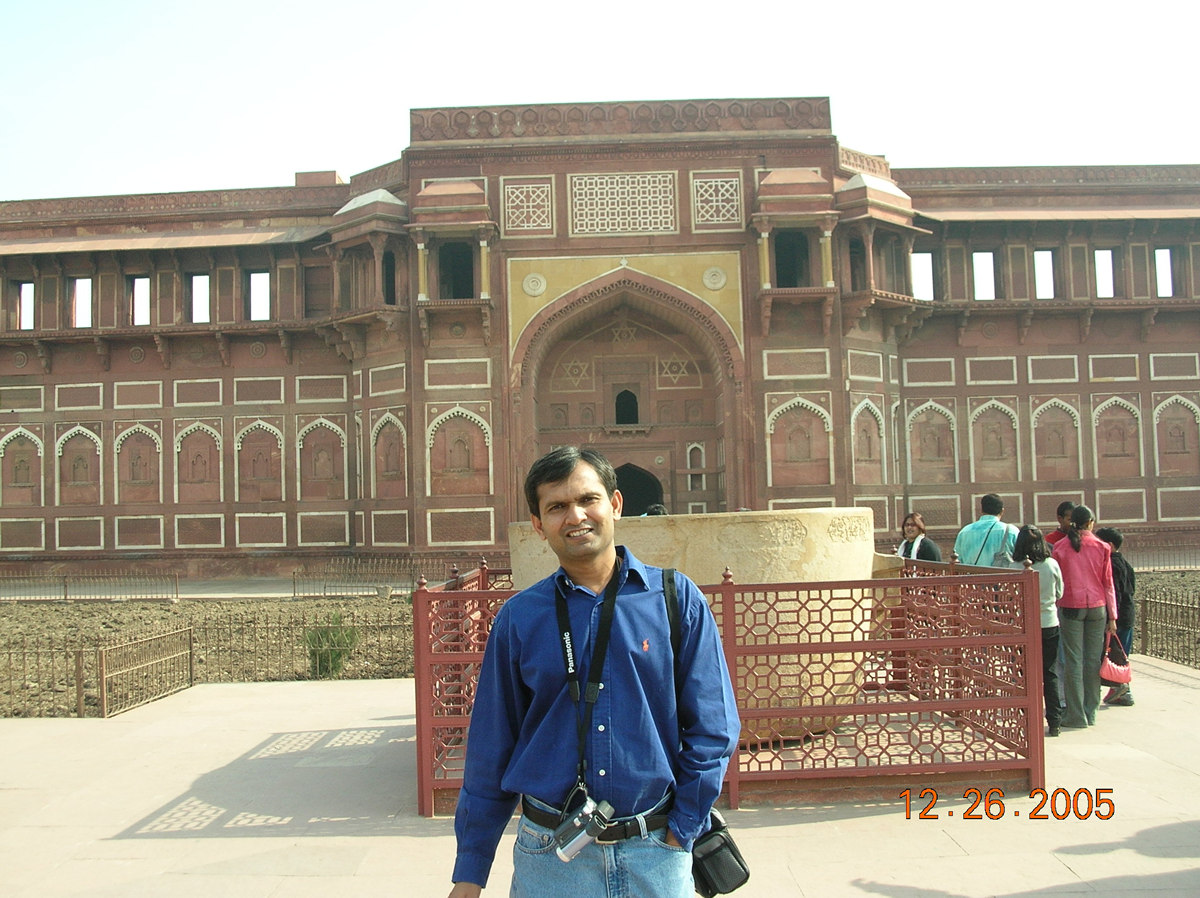
A palace inside Agra Fort: After going through the Amar Singh Gate you walk over a ramp and enter the Great Courtyard. On the right hand sight, there's the many pillared Diwan-i-Am (Hall of Public Audience). It was built by Shah Janan in 1628. Furthermore you find the Royal Pavilions. It contains beautiful mosques (Nagina Masjid & Mina Masjid), palaces (Macchi Bhavan, Khas Mahal, Shish Mahal, Shah Jahani Mahal) and the Zenana Mina Bazaar. Several of the buildings are made of pure marble with beautiful carvings. To cool off the rooms in the marble pavilions, the walls were hollow and filled with running water. From the balconies in the pavilions, you have a nice view on the Yamuna river and the Taj Mahal.
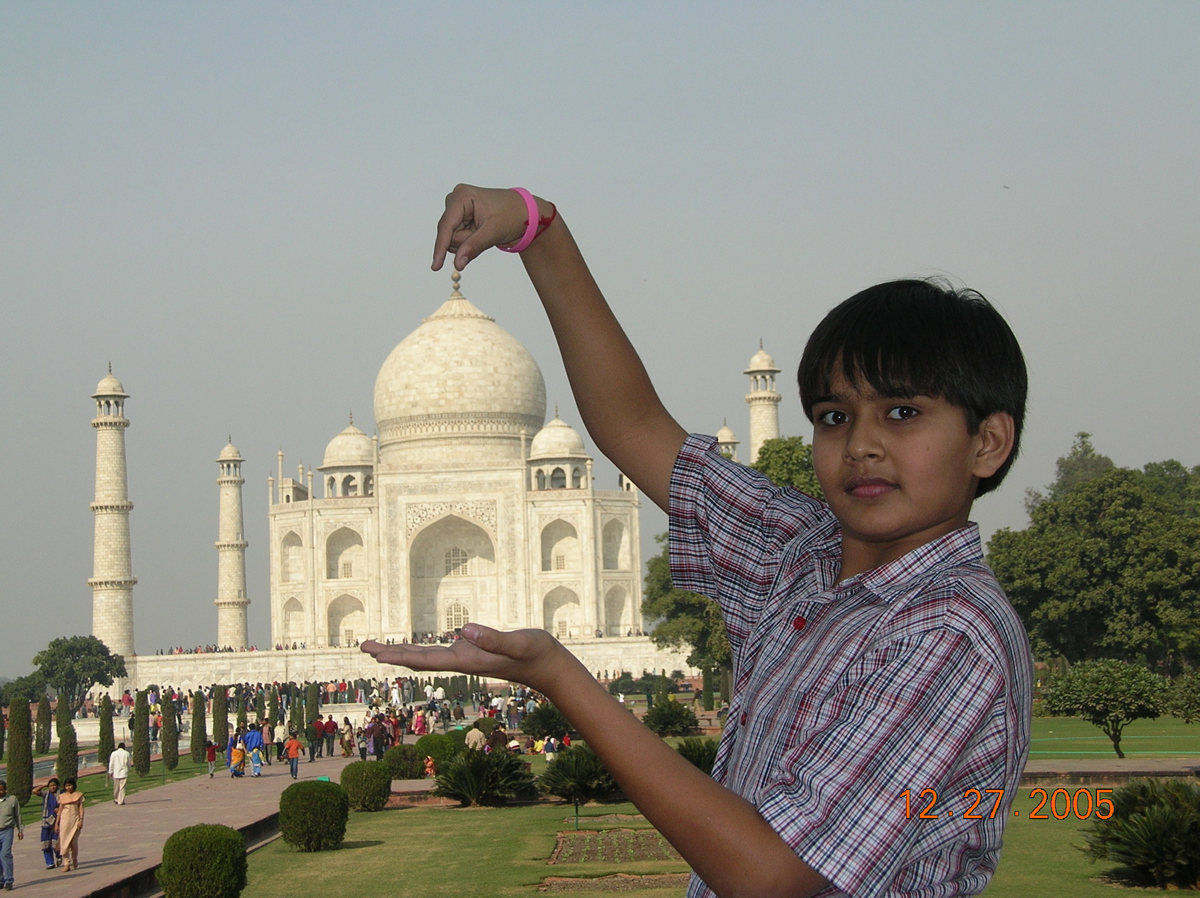
Yes, you can really put the Taj Mahal between two hands (in a picture). However in reality this structure is 250 plus feet tall. Unless you pay attention, you can not feel the wonder of this monument. Look at how tall the people look who are standing close to the Taj Mahal. This will show you how enormous this all-marble monument is and aren't you surprised that it was built almost 350 years ago when there were no machines to cut, move or polish!

The Taj Mahal is probably the most famous building in the world. Its picture has covered many magazines and travel brochures, and everyone has probably seen a picture of it, but nothing really compares like the real thing - the Taj Mahal looks a lot better in reality than on a picture. Even those who come to see the Taj with high expectations never fail to be overwhelmed by its beauty. The Taj Mahal was built by Shah Jahan to enshrine the body of his wife, Arjumand Bann Begum (Mumtaz Mahal) after she died in 1630 at Burhanpur in South India. The construction started in 1632 and was completed in 1653. The workforce of some 20,000 included craftsmen from Italy, Persia and Turkey. It is built by the bank of the Yamuna river not very far from the Agra Fort.
Its central dome is fifty-eight feet in diameter and rises to a height of 213 feet. It is flanked by four subsidiary domed chambers. The four graceful, slender minarets are 162.5 feet each. The entire mausoleum (inside as well as outside) is decorated with inlaid design of flowers and calligraphy using precious gems such as agate and jasper. The main archways, chiseled with passages from the Holy Qur'an and the bold scroll work of flowery pattern, give a captivating charm to its beauty. The central domed chamber and four adjoining chambers include many walls and panels of Islamic decoration.
And now some pictures of Jaipur- the city of pink, palaces, temples and forts. Very nice, beautify city.

With an old canon in City Palace, Jaipur.
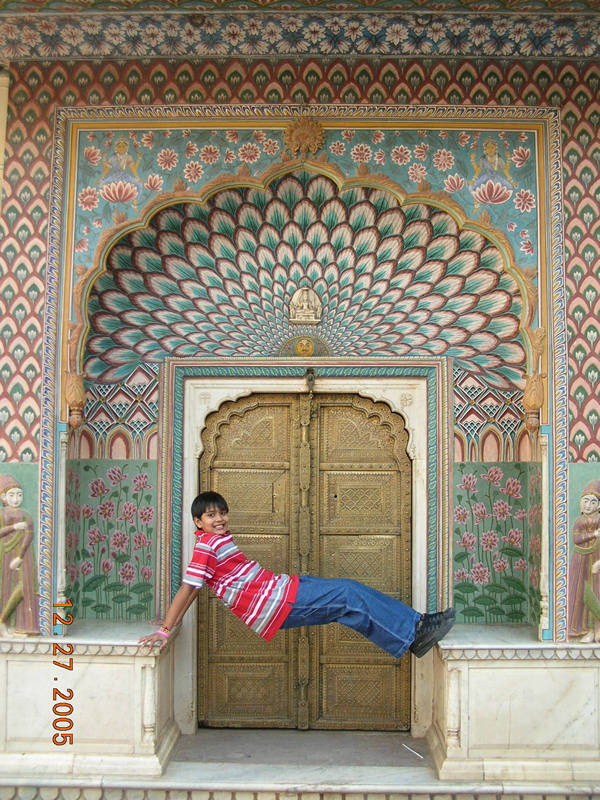
This City Palace of Jaipur has four such beautiful colored doors.
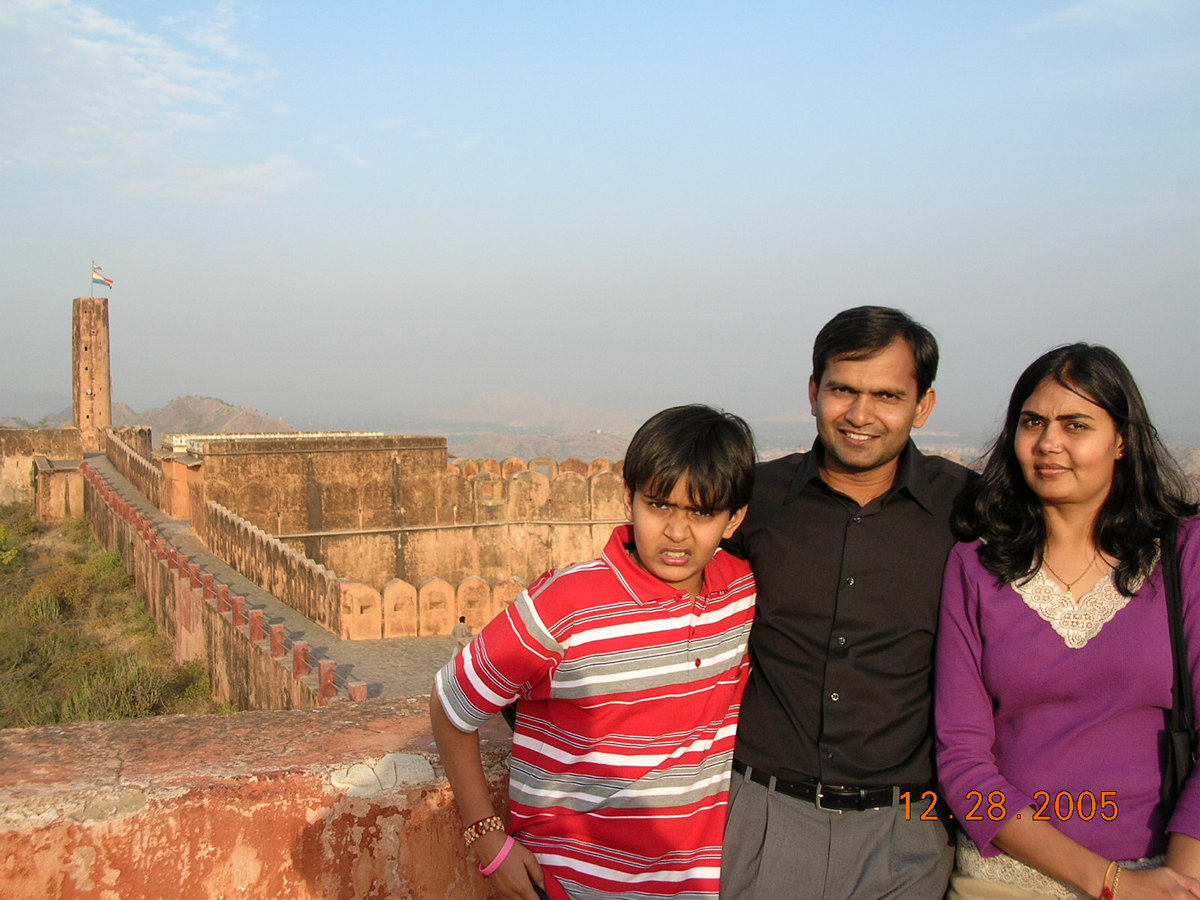
The Jaigarh fort was built to bolster up the defense of Amer, so one should not be amazed to find that the fort unlike most palaces and forts of Jaipur is quite plain and simple. It has moats and all the features you would expect of a full-fledged citadel. The highlight of the tour of Jaigarh Fort is definitely the Jaivana, which is the world's largest cannon on wheels. It was built in Jaigarh's foundry in the year 1720. Many say that the cannon was only used once and the ball fell some 35kms away on a village. But that's quite doubtful, since a closer inspection of the cannon actually revealed that it has been fired at least a couple of times. The Fort has a lot of wide water channels, which were a part of a rainwater harvesting system. There are 3 underground tanks at the fort, the largest one of which could store 60,00,000 gallons of water. An interesting story about this tank is that, many believed it contained hidden treasure but unfortunately Indian Government searched for it and did not find anything at all.
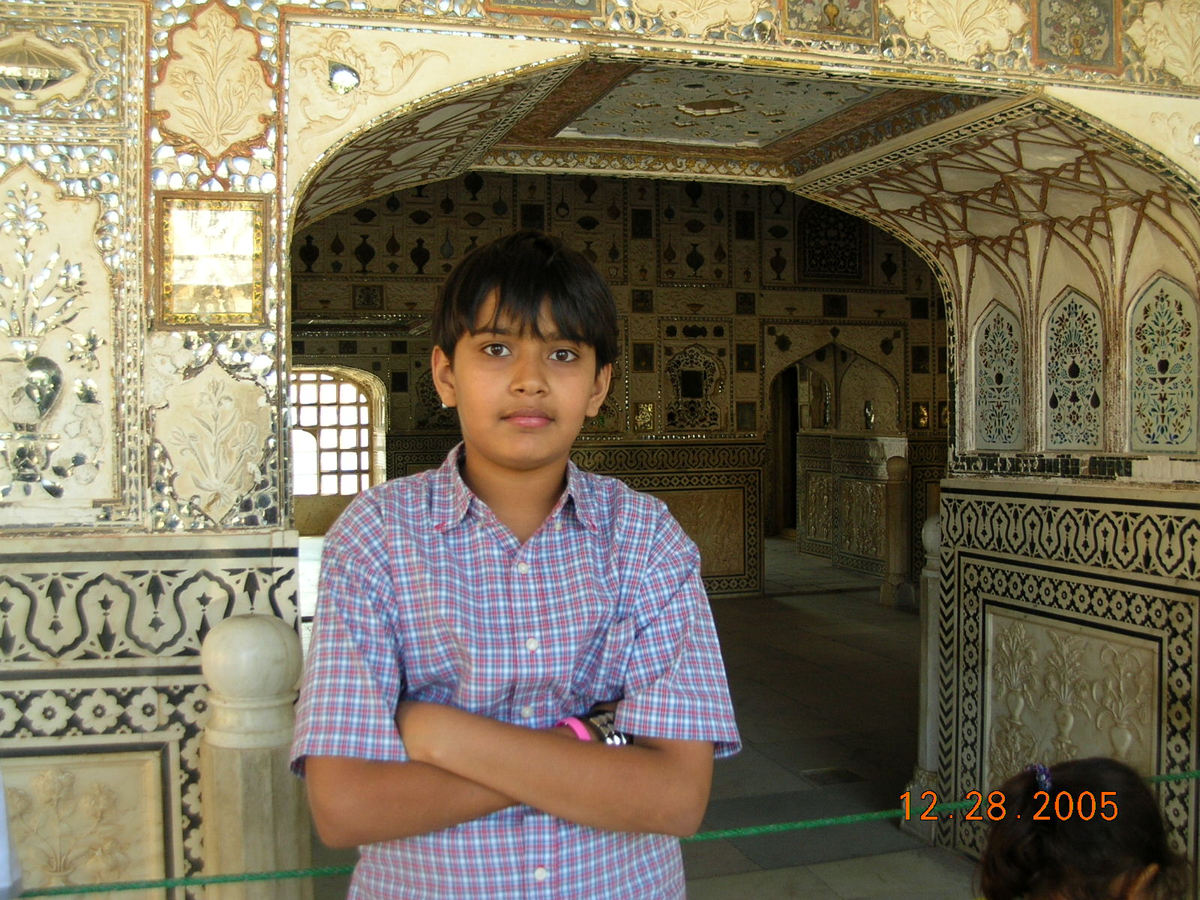
About Amber Palace About 11 km from Jaipur, Amber is the former capital of the Kachhwaha Rajputs. Raja Man Singh I, the army commander of the Mughal army during the reign of Akbar commenced the construction of the Amber Palace in 1592. Later Raja Jai Singh and Sawai Jai Singh completed the construction work of the fort and palace. Built in red sandstone and white marble, the Maber Palace is a wonderful combination of Hindu and Mughal Architecture. Amber fort and palace are the must-visit travel attractions for the travelers to Jaipur in Rajasthan. The palace or the royal apartments lies inside the massive Amber fort complex with gateways, gardens, halls, stairways, pillared pavilions, temples and palaces. Some of the monuments inside the fort that are worth visiting are Sheesh Mahal (shown in picture above), Jai Mandir, Diwan-e-Aam, Kali Temple, Diwan-e-Khas and Diwan-e-Aam.
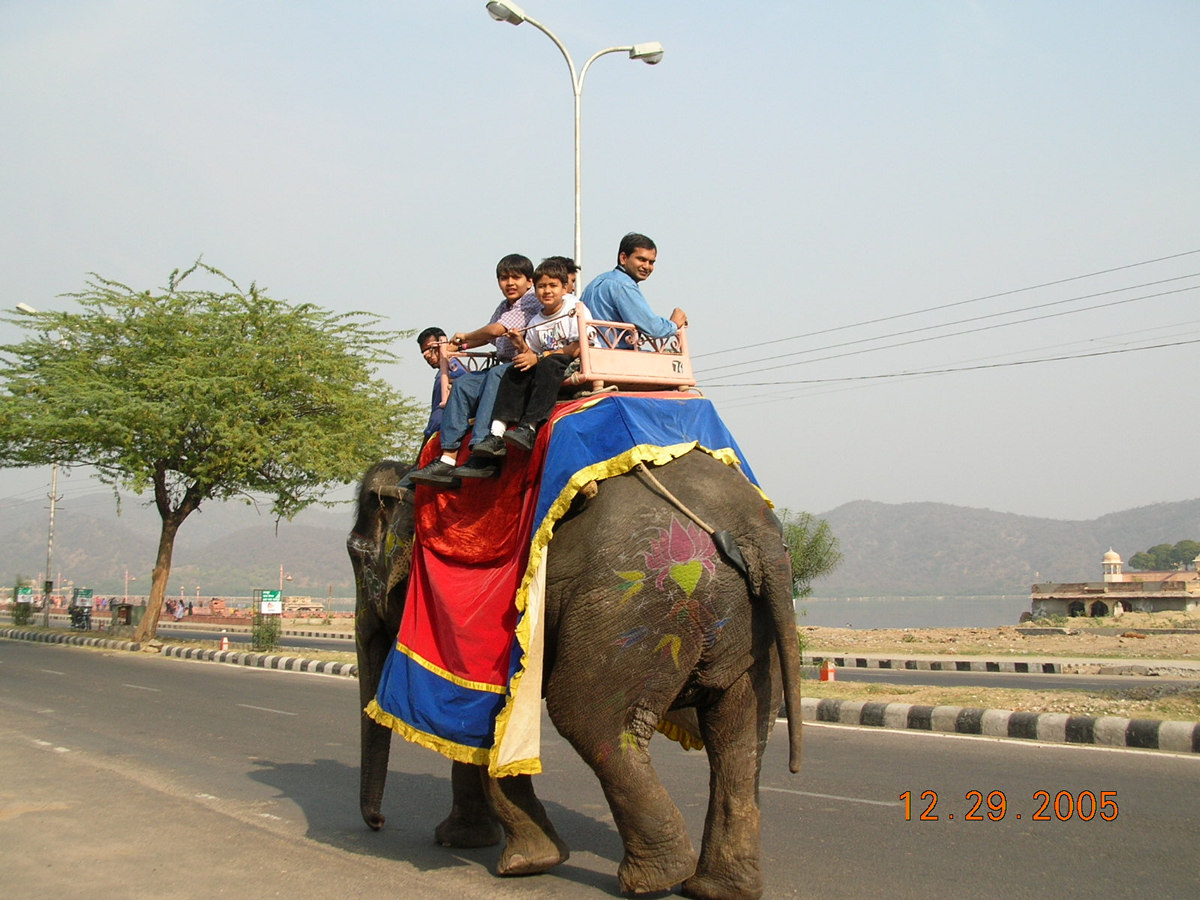
And a joy ride in Jaipur on an elephant.
To visit India, you will need India Visa photos- Two recent 2 x 2 passport type photographs, in color, front view and with a plain/light background. To get details about the photo requirements for India Visa, click here. The Visa application will need to be sent to Travisa irrespective of which Consulate of India you are dealing with.